Recycling and Sustainability for Business Waste Removal Pinner
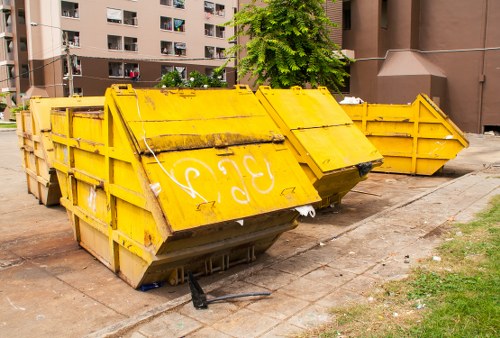 Business Waste Removal Pinner is committed to creating an eco-friendly waste disposal area and supporting a resilient, sustainable rubbish area across Pinner and the surrounding boroughs. Our approach balances practical commercial waste collection with measurable environmental goals — helping local businesses reduce landfill, increase reuse and improve recycling rates. We partner with local reuse networks and ensure that every collection is sorted for maximum recovery. Our focus is on reuse first, recycling second, and responsible disposal last.
Working closely with commercial clients, we tailor collections so that cardboard, paper, glass, metal and other dry recyclables are segregated at source. Many boroughs in northwest London promote separate streams for food waste, garden waste and dry recycling; we design collection plans that align with those municipal systems and help businesses meet local requirements. Pinner commercial waste recycling is therefore not just a service but a collaboration with local authority strategies to cut residual waste.
 Our environmental targets are clear and ambitious: we have set a recycling percentage target of 70% of all commercial waste collected by 2028, with interim milestones for 2025. This target covers reuse, recycling and material recovery across streams. To achieve it we feed separated materials into local transfer stations and materials recovery facilities (MRFs) located within Harrow and neighbouring boroughs, ensuring short haul transfers and lower emissions. We also prioritise diverting reusable furniture, IT equipment and office supplies to charities and community projects.
Partnerships, Local Facilities and Reuse Networks
We build strong partnerships with charities and social enterprises to maximise rehoming of usable items. Partnerships with charities include collaboration with local furniture banks, community reuse centres and national redistribution schemes that operate regionally. These partnerships reduce waste tonnage, support vulnerable communities and create circular value from materials that would otherwise be disposed of. In practice we coordinate donations, issue diversion reports and handle simple refurbishment or repair logistics before items are passed on.
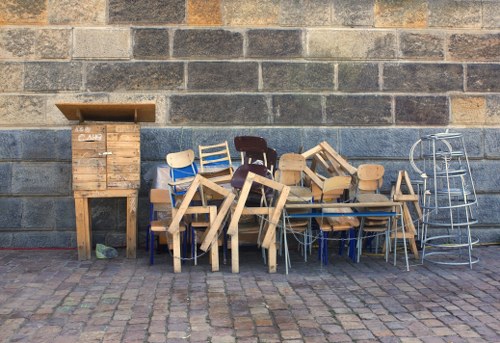 To support the logistics of circular reuse, our service connects with nearby transfer stations and consolidation points. We use authorised local transfer stations across Harrow and neighbouring boroughs to consolidate segregated loads heading to specialist recyclers and MRFs. This localised routing reduces mileage and ensures higher recovery rates for paper, cardboard, plastics, metals, glass and textiles. Commercial waste removal in Pinner is therefore integrated with an efficient regional infrastructure.
Our service also offers tailored recycling services for common local waste types: office paper and card, food waste from hospitality, wood and plasterboard from small construction projects, and separate textile collections for donation and recycling. We work within the boroughs' approach to waste separation — for example, encouraging clear source segregation for dry recycling, food, and residual streams — so businesses can align with council collections where appropriate.
Low-Carbon Fleet, Monitoring and Operational Practices
Our fleet uses low-carbon vans and a growing number of electric and hybrid vehicles to reduce emissions on every route. Route optimisation software and consolidated collections minimise unnecessary mileage and time on the road. These low-emission vehicles and efficient routing are a core part of our strategy to lower the carbon intensity of commercial rubbish removal. Pinner business rubbish removal becomes greener through cleaner vehicles and smarter logistics.
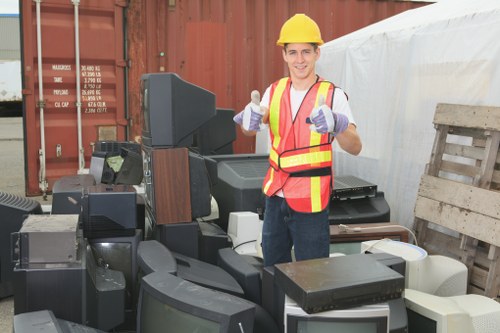 We publish regular environmental performance summaries for our clients, showing diversion rates, tonnages sent to reuse partners, and the proportion of material recovered through MRFs. Regular waste audits and practical staff training help businesses improve separation at source, increasing the capture of recyclable streams and reducing contamination. Transparent reporting allows businesses to track progress toward the 70% recycling target and make operational changes that support sustainability.
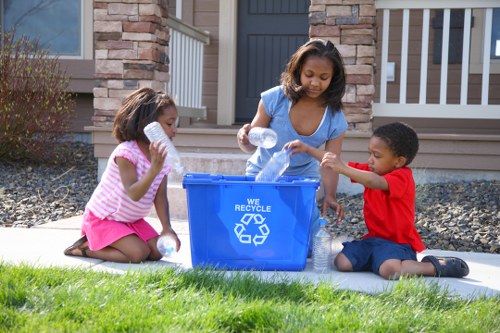 In practice, sustainable rubbish area management includes on-site segregation points, labelled containers for dry recyclables, food waste bins where needed, and scheduled collection frequencies that match business activity. We also offer bespoke solutions for bulky items, electronic waste and construction surplus, directing each stream to the best available reuse or recycling pathway. By combining charity partnerships, local transfer stations and a low-carbon van fleet, our commercial waste disposal services in Pinner aim to deliver both operational convenience and strong environmental outcomes.
Summary of key sustainable services:
- 70% recycling percentage target for commercial collections by 2028 with interim targets for 2025.
- Use of local transfer stations and MRFs to reduce haul distances and improve recovery.
- Active partnerships with charities and reuse networks to minimise landfill and support community reuse.
- Low-carbon vans, electric/hybrid vehicles and route optimisation to cut emissions.
- Alignment with borough waste separation approaches to improve on-site segregation and reduce contamination.
Our goal is simple: create a practical, scalable model for eco-friendly waste disposal and a resilient, sustainable rubbish area that helps Pinner businesses meet regulatory expectations while supporting the circular economy across the boroughs.
